Current Mood: 

(Art by Lynn Bonnette)

The March Birth Flower is the Jonquil (aka Daffodil or Narcissus).
Meaning: Friendship and Domestic Happiness.
Hidden Message from Victorian Times: “You are an Angel.”

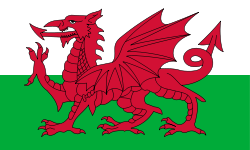
National Flower of Wales
Flower Language
Regard or unrequited love (Victorian)
Chivalry (The great yellow daffodil-Victorian)
Good fortune (Chinese)
mirth and joyousness (Japan)
Mythology/ Folklore
According to the Greek mythology, Echo was a mountain nymph who fell madly in love with a beautiful young man, Narcissus-- a vain youth who cared for nothing but his own beauty. He spent all his time looking at his own reflection in a pool of water and spurned Echo's love until she finally faded away, leaving nothing but her voice. The gods, angry with Narcissus because of his vanity, changed him into a flower who was destined always to sit by a pool nodding at his own reflection.
Similar versions of this myth occur in Rome, Arabia, Egypt, Spain and Portugal.
Venus, god of beauty, governs all daffodils except the yellow, and that belongs to Mars, god of war.
Narcissus was also sacred to to Persephone, embodiment of the earth's fertility and Queen of the Underworld.
Jonquil Violent Sympathy and Desire.
Have pity on my passion.
Although the jonquil is a member of the narcissus family, the narcissus have only one flower per stem and the jonquil have cluster of flowers per stem.
The particularly favorite flower of Queen Anne was jonquils. She wove patterns of jonquil blossoms in her delicate needlework which included carpets, tapestry and dresses. She was inspired by her love of jonquils to establish Kensington Palace Gardens, the first public gardens in England.
A Greek myth relates the story of Proserpina. While she gathering lilies, she was kidnapped the to god Pluto who carried her to the underworld. As Pluto carried Proserpina, she dropped the lilies. As the lilies fell to earth, they became daffodils, hanging their heads for Proserpina's sorrow.
A superstition in Maine states that you will cause a daffodil not bloom if you point at it with an index finger.
Link 1 / Link 2 / Link 3

Current Mood: 

I've always been a fan of The Language of Flowers from Victorian Times, and recently I discovered that each birth month is represented by a particular flower.
For the month of February, it's the sweet VIOLET that takes center stage.
*The pansies are a large group of hybrid plants cultivated as garden flowers. Pansies are derived from Viola species Viola tricolor hybridized with other viola species, and pansy and violet belong to the same genus and family.
A Good Luck Gift to a Woman
Modesty and Simplicity
I return your love
Violet symbolizes faithfulness, humility, and chastity
~♥~♥~♥~♥~♥~♥~♥~♥~♥~
Flower Language:
Pansy (Victorian): “to think,” particularly of love.
If a maiden found a honeyflower and a pansy left for her by an admirer, it would mean "I am thinking of our forbidden love" in symbol rather than in writing.
However, it is considered a bad-luck gift to man.
Violet (Victorian): “modesty” hence the term "shrinking violet." However, based on color:
Blue: I'll always be true, faithfulness, watchfulness
White: Let's take a chance
~♥~♥~♥~♥~♥~♥~♥~♥~♥~
Mythology/ Folklore

The three colors of the original pansy-- purple, white and yellow-- were thought to symbolize memories, loving thoughts, and souvenirs-- all things that ease the hearts of separated lovers.
According to German and Scottish folktales, pansies were called stepmother: the large lower petal is the mother, the the two large petals to either side of her are the well-dressed daughters, and the two small upper petals are poor stepdaughters.
In another German story, the pansy at one time had a wonderfully strong, sweet scent. People would travel from miles around to smell this scent. In doing so, however, they would trample down the grasses surrounding the pansy. Because this ruined the feed for cattle, the pansy prayed to God for help. God gave the plant great beauty but took away the scent.
According to the doctrine of signatures, pansy leaves, which are heart shaped, were used to cure a broken heart.
Pansies were fortune tellers for King Arthur's Knights of the Round table. Plucking a pansy petal, the knights would look for secret signs. If the petal had four lines, this meant hope. If the lines were thick and leaned toward the left, this meant a life of trouble. Lines leaning toward the right signified prosperity until the end. Seven lines meant constancy in love (and if the center streak were the longest, Sunday would be the wedding day). Eight streaks meant fickleness, nine meant a changing of heart, and eleven signified disappointment in love and an early grave.
~♥~♥~♥~♥~♥~♥~♥~♥~♥~
History/ Modern Use

The Celts made a tea from the dried leaves and used it as love potion.
Pansy has dozens of common names, such as Johnny-jump-up, and the faces created by the patterns on the petals give rise to names like monkey faces, peeping Tom, and three faces in a hood.
Its supposed magical powers in the ways of love resulted in names such as cull-me—to-you, tickle-my-fancy, love-in-idleness, kiss-her-in-the-pantry, and heartease.
The Ancient Greeks considered the Violet a symbol of fertility and love, they used it in love potions.
Pliny recommended that a garland of violets be worn above the head to ward off headaches and dizzy spells.
~♥~♥~♥~♥~♥~♥~♥~♥~♥~
Literature/Arts
In William Shakespeare's play A Midsummer Night's Dream, the juice of a pansy blossom ("before, milk-white, now purple with love's wound, and maidens call it love-in-idleness") is a love potion: "the juice of it, on sleeping eyelids laid, will make a man or woman madly dote (fall in love) upon the next live creature that it sees." (Act II, Scene I)
*Legend says that at one time all pansies were white, and it was not until they were pierced by cupid's arrow that they gained the purple and yellow colors. With the colors, however, came the magic power to be used in love potions.
Link 1 / Link 2 / Link 3
Love Quote of the Day:
I love that one. It's so cute. 

Current Mood: 

(Via)
I've always loved The Language of Flowers from Victorian Times, but I'd never thought of each birth month being represented by a particular flower.
For the month of January, it's the beautiful CARNATION that takes center stage.
Victorian Language:
General: Affection, health & energy
Pink: Mother's Love, or I'll never forget you
Red: Admiration, my heart is aching
Solid colored: Yes, acceptance
Striped: Refusal, no, I can't be with you
White: Pure love, innocence, good-luck gift to a woman
Yellow: Rejection, disdain
Purple: Antipathy, capriciousness
----------------------------------------
The earliest mention of carnations was in connection with the Crusaders, who were stricken with the plague near Tunis in the 13th century. They drank wine mixed with leaves of the pinks to help control the raging fevers, and took the flower back to France.
During the Renaissance, pinks were associated with happiness and carefree days, and because of this, they were used to “combat melancholy and cheer the heart” according to an ancient herbal.
Red - Worldly Desires and Approval
Purple - Unpredictable and Opposing
Pink - Symbol of Mother's Day
White - True and Pure Love
Link 1 / Link 2 / Link 3

(Link via True Book Addict)
I've decided that for my very first "Cat Thursday," the spotlight should go to our eldest cat of 19 years. Her name is "Tiger Lily" ... yes, another Disney name... and she most definitely ADOPTED US. 
It would be foolish of me to state otherwise.

More photos of Tiger Lily, aka "Kitty Girl," can be found on my Pets Blog. I wish I had more photos of her, but Tiger Lily is a little too 'butch' to liken to having a camera in her face.
Her daughter on the other hand... totally different story. Lol!


